 The Heart Asks Pleasure First — Valentina Lisitsa | Shazam
 Rock And Roll, Part 2 — Gary Glitter | Shazam
 Red Hot — ELLEGARDEN | Shazam



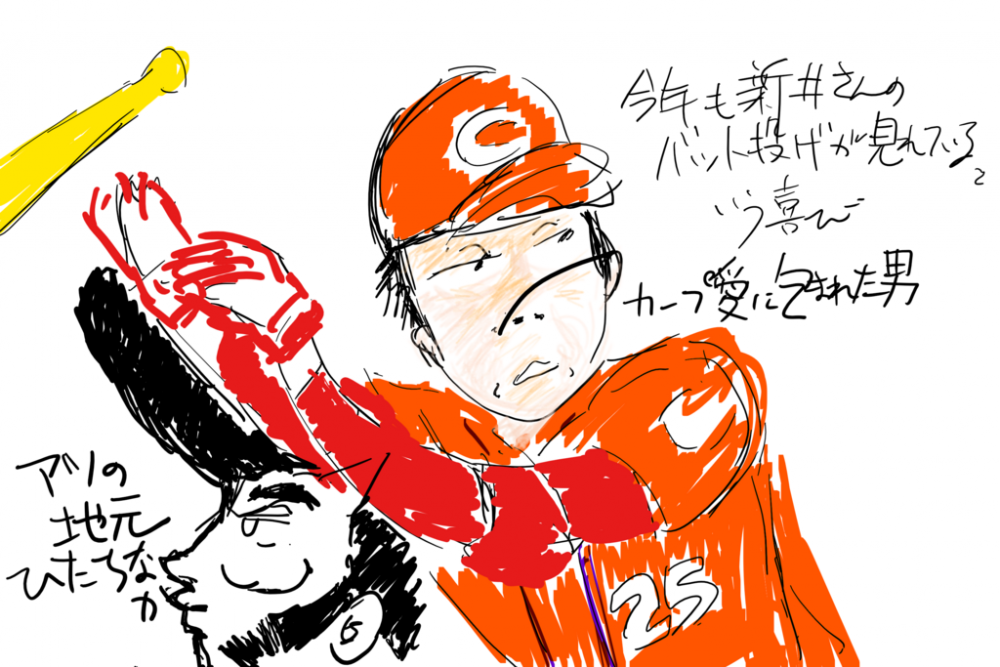
水曜日、雨中のひたちなかカープxジャイアンツ戦を自宅でテレビ観戦。初回で大勢の決まった試合だったか、何度か流される新井貴浩、通称新井さんのバット投げは今年初。今年も拝めることができてうれしいところ。 今回、描いた後保存もせずWindowsIInkをそのままにしていたら、新井さんの顔の部分に線が入ってしまったようだ。これの修正をかけようと思ったらアンドゥ機能が効かなかった。よくマニュアルを見ているわけではないのでしょうがないけれども、こうしたミスを防ぐ対策も必要そうだ。もっと、過去ファイルを簡単に引っ張れるようならいいのに。そのためには付箋、とかを使うのだろうか。 撓まず 屈せず 挫折を力に変え…
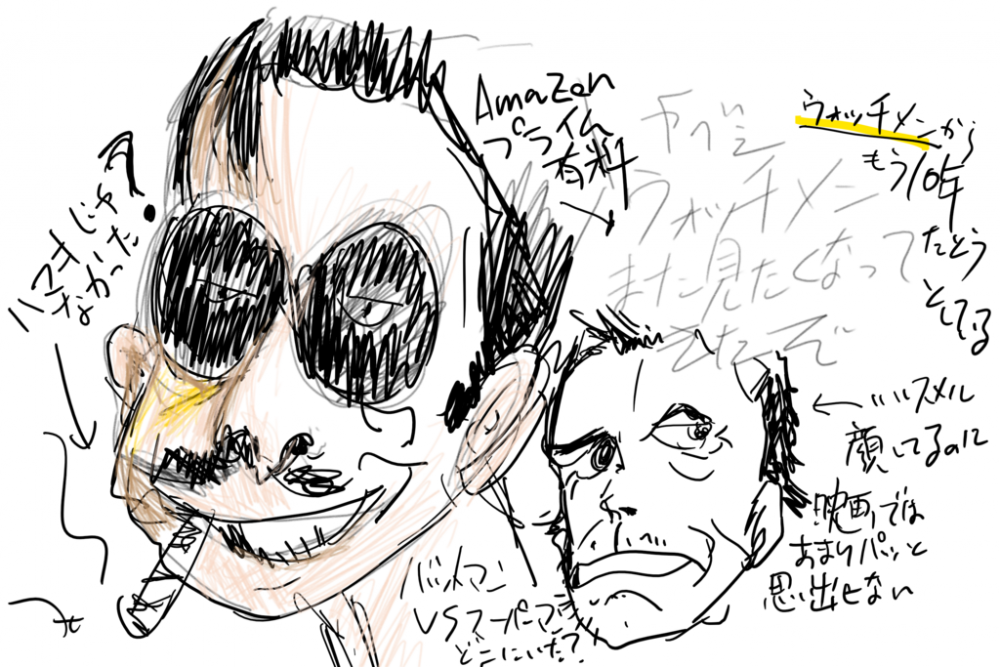
Surface借りてきた初日に「ランペイジ巨獣大乱闘」を観に行ったら、気になった役者ジェフリー・ディーン・モーガンの話の続き。 「ウォッチメン」パンフレットをひきづりだしてつらつらと始めるWindowsInkでの落書き。テレビなどを見ながらよくノートにやっているやつだが、それをSurfaceで。ワークショップの際、専用ペンを使用することで指を接着して作業ができるこのSurface、気持ちよく落書きを開始した。気になったのはレイヤー機能がないようで色塗りに難があるところだろうか。思いつくままに筆を滑らせるのにそうした機能必要ない、と割り切るのも一考か。今、自分の頭の中に展開しているものを、場合に…
【20130518あれ観たよ】吹替・3D版映画『アイアンマン3』新・予告編2!! 日本語字幕 Iron Man 3 ミッキー・ロークが「お嬢さん、おはいんなさい」と近づいてくる「アイアンマン2」は劇場でパス。「アベンジャーズ」を越えて、俺のTwitterタイムラインを賑わせていた…

 8月 4th, 2021
 taraco
The Heart Asks Pleasure First — Valentina Lisitsa | Shazam
Rock And Roll, Part 2 — Gary Glitter | Shazam
Red Hot — ELLEGARDEN | Shazam
8月 4th, 2021 taraco 
Taraco-Sell-たらこせる @taraco
浜口京子に振ってしまった。おさまった。 #グッドモーニング
07:53


Taraco-Sell-たらこせる @taraco
アサ芸気さくなあの子目をとじとじ (@ ファミリーマート 入曽駅前店 – @famima_now in 狭山市, 埼玉県) https://www.swarmapp.com/c/7dRTCp0Meit
08:15
Taraco-Sell-たらこせる @taraco
一路、羽田へ。 (@ 入曽駅 – @seiburailway in 狭山市, 埼玉県) https://www.swarmapp.com/c/22steXqtV7Z
08:16
Taraco-Sell-たらこせる @taraco
乗り換え。 (@ 西武 高田馬場駅 – @seiburailway in 新宿区, 東京都) https://www.swarmapp.com/c/lwDmCXAJnv4
09:10
Taraco-Sell-たらこせる @taraco
まあまだこんなもんだなという混雑 (@ JR 高田馬場駅 – @jreast_official in Shinjuku, 東京都) https://www.swarmapp.com/c/cwBqgjDaWit
09:10
Taraco-Sell-たらこせる @taraco
誰か #プロ野球川柳 の土性沙羅あげてえー。
09:20
Taraco-Sell-たらこせる @taraco
乗り換え (@ 品川駅 in 港区, 東京都) https://www.swarmapp.com/c/8TvrMNDEhhh
09:36
Taraco-Sell-たらこせる @taraco
43分急行待ち (@ 京急 品川駅 – @keikyu_official in 港区, 東京都) https://www.swarmapp.com/c/g8eqU6Jfbd8
09:38
Taraco-Sell-たらこせる @taraco
「オフィシャル水素」そんなものあるのか。水素水もあるかな。
09:42
Taraco-Sell-たらこせる @taraco
腹減ってきた。 (@ 羽田空港第1・第2ターミナル駅 in 大田区, 東京都) https://www.swarmapp.com/c/74ICdGaotod
10:08
Taraco-Sell-たらこせる @taraco
アサ芸をここで確認することになるとは。ビールは売ってるけど店舗では出してない。そして人少ないや。 (@ 東京国際空港 (羽田空港) – @haneda_official in 大田区, 東京都) https://www.swarmapp.com/c/lgaHuH3wLhE
10:32
Taraco-Sell-たらこせる @taraco
ちょっくらズムスタ行ってきます。 (@ 搭乗口6 in 大田区, 東京都) https://www.swarmapp.com/c/0HUXfzhxi0Y
10:49
Taraco-Sell-たらこせる @taraco
ひろしま世界遺産航路予約した。支払いは現地かこれ。
10:51
Taraco-Sell-たらこせる @taraco
お初の空港。呉へのバス、待つなあ。 (@ 広島空港 in 三原市, 広島県) https://www.swarmapp.com/c/loUJEmIvY1C
12:28
Taraco-Sell-たらこせる @taraco
長男は喜んでいるが、市内名店行けばさらなる強敵(とも)が存在する事をそっと伝える。 (@ みっちゃん いせや 広島空港店 in 三原市, 広島県) https://www.swarmapp.com/c/ffQsoMFmvNS https://twitter.com/taraco/status/1422404752705523712/photo/1
12:51

Taraco-Sell-たらこせる @taraco
呉に向かうよ。バス本数すごく少ないのね。 (@ 広島空港 リムジンバス乗り場 in 三原市, 広島県) https://www.swarmapp.com/c/gHVXRrDlU7z
13:09
Taraco-Sell-たらこせる @taraco
歩くよ! (@ 呉本通3丁目) https://www.swarmapp.com/c/1lhcrth6WxP
14:05
Taraco-Sell-たらこせる @taraco
かなーしくーてーかなしくてーとてーもやーりーきれーない (@ 旧澤原家住宅 三ツ蔵 in 呉市, 広島県) https://www.swarmapp.com/c/1OY5zWXZ2xZ https://twitter.com/taraco/status/1422431873230327830/photo/1
14:39

Taraco-Sell-たらこせる @taraco
港の方に行ってくる。 (@ 呉駅前 バスのりば in Kure, Hiroshima) https://www.swarmapp.com/c/4SoG3rE9nGn
14:51
Taraco-Sell-たらこせる @taraco
どゆこと? (@ 旧呉鎮守府司令長官官舎 in 呉市, 広島県) https://www.swarmapp.com/c/kKHXfOXA4fA https://twitter.com/taraco/status/1422439376542388258/photo/1
15:09

Taraco-Sell-たらこせる @taraco
お父さんかつぎこまれたとこか。 (@ 呉海軍病院跡 in Kure, Hiroshima) https://www.swarmapp.com/c/bkHRIcxIFER https://twitter.com/taraco/status/1422440255974690862/photo/1
15:12

Taraco-Sell-たらこせる @taraco
気持ち撮影だけしてズムスタに参ろうぞ (@ 海上自衛隊 呉地方総監部 in 呉市, 広島県) https://www.swarmapp.com/c/4fMdzU9oyon https://twitter.com/taraco/status/1422442762377510912/photo/1
15:22

Taraco-Sell-たらこせる @taraco
外回るだけ。 (@ てつのくじら館 (海上自衛隊呉史料館) – @jmsdf_kure_mus in 呉市, 広島県) https://www.swarmapp.com/c/1t12bqo4dfb https://twitter.com/taraco/status/1422444889921445888/photo/1
15:31

Taraco-Sell-たらこせる @taraco
フラペチーノは明日! (at @Starbucks in 呉市, 広島県) https://www.swarmapp.com/c/3hERTE63mEW
15:33
Taraco-Sell-たらこせる @taraco
ああ、喉乾いた。ビアスタンドはやっていますか?やっていますか? (@ 呉駅 – @jrwest_hiroyama in 呉市, 広島県) https://www.swarmapp.com/c/k9vJCzoxW1X
15:39
Taraco-Sell-たらこせる @taraco
着いたぞ広島駅。 (@ 広島駅 in 広島市, 広島県) https://www.swarmapp.com/c/0NOLTq5KIgq
16:23
Taraco-Sell-たらこせる @taraco
シャープつぎ!たまらん! (@ ビールスタンド重富 in 広島市, 広島県) https://www.swarmapp.com/c/88m5dR1q6k7 https://twitter.com/taraco/status/1422460659988578304/photo/1
16:33

Taraco-Sell-たらこせる @taraco
ドリンクを買っていく模様。 (@ ローソン – @akiko_lawson in 広島市, 広島県) https://www.swarmapp.com/c/7wQP58p6WuZ
16:43
Taraco-Sell-たらこせる @taraco
本日の席。二階席に夕凪少々。 (@ Mazda Zoom-Zoom スタジアム広島 in 広島市, 広島県) https://www.swarmapp.com/c/k0irmOz0FAO https://twitter.com/taraco/status/1422470900344107027/photo/1
17:14

Taraco-Sell-たらこせる @taraco
全部入り。全部入りでハイボールを飲む。 (@ カープうどん in 広島市, 広島県) https://www.swarmapp.com/c/bnQfahepTvV https://twitter.com/taraco/status/1422475896867467299/photo/1
17:34

Taraco-Sell-たらこせる @taraco
ライオンズ がガチスタメンだった。
17:38
Taraco-Sell-たらこせる @taraco
@ponnieblue ファンクラブ招待券当選でマイルでやっできたのでホテル代と食費のみで過ごしとります。
17:45
Taraco-Sell-たらこせる @taraco
ライオンズナインを挑発する毛 https://twitter.com/taraco/status/1422481194302677001/photo/1
17:55

Taraco-Sell-たらこせる @taraco
どすこーい
18:32
Taraco-Sell-たらこせる @taraco
風が運んでくれました〜
19:15
Taraco-Sell-たらこせる @taraco
長野の夏
19:57
Taraco-Sell-たらこせる @taraco
さて、おこのもう。 (@ 八丁堀電停 in 広島市, 広島県) https://www.swarmapp.com/c/krefYhqtXYm
21:17
Taraco-Sell-たらこせる @taraco
昼食べたのとは別物。うめえ。 (@ へんくつや 総本店 in 広島市, 広島県) https://www.swarmapp.com/c/fVjVf9Wddgs https://twitter.com/taraco/status/1422539019146219520/photo/1
21:45

Taraco-Sell-たらこせる @taraco
温泉チャイチー。貸切と思ったら続々ちんこ集団お越しになりました。ぶらーん。 (@ スーパーホテル広島天然温泉・薬研堀通り in 広島市, 広島県) https://www.swarmapp.com/c/lFbTxjpcZbF
22:47
| ツイート | お気に入り | フォロー | フォロワー |
| 246299(+39) | 982(0) | 656(0) | 916(0) |
8月 3rd, 2021 taraco WordPress is global in reach and open source in nature. And you would assume that what allows the software to be used by anyone would also enable it to be built by anyone. After all, your location doesn’t matter, and who employs you also doesn’t matter. And your relative social standing certainly shouldn’t matter. As long as you can communicate with the others contributing to the project, there should be no obstacle to your participation.
That was Josepha Haden on the “Cherishing WordPress Diversity” episode of the WP Briefing Podcast, speaking about the importance of diversity, equity, and inclusion within the fabric of the WordPress project. Her statement captures the spirit of the WordPress open source project, and we hope it resonates with you. Now, let’s dive in!
WordPress version 5.8, “Tatum,” came out on July 20. Version 5.8 is a major release that offers features like block-based widgets, a host of new blocks and patterns, a template editor, a duotone feature to stylize images, theme.json, and support for webP images, to name a few. Read more in the release post, the field guide, and the talking points post for meetup groups.
Want to contribute to WordPress core?
Contributor teams released the 11th version of Gutenberg on July 9. Version 11.0, which focuses heavily on backports and bug fixes, showcases some cool features such as an editing overlay for template parts and reusable blocks, and support for CSS shorthand properties in theme.json and block attributes. Version 11.1 was also shipped this month, on July 21. The release adds custom block borders as block supports and adds “drag and drop” to the list view.
Want to get involved in building Gutenberg? Follow the Core Team blog, contribute to Gutenberg on GitHub, and join the #core-editor channel in the Make WordPress Slack. The “What’s next in Gutenberg” post offers more details on the latest updates.
The Community Team kicked off work to bring back in-person WordPress events. The team recently announced that in-person WordPress meetups can be organized in a region if the local public health authority allows in-person events and if the region passes the in-person safety checklist. If the region does not meet guidelines on page one of the safety checklist, organizers can plan events for fully vaccinated, recently tested (negative), or recently recovered community members. Subsequently, the team also shared a proposal for the return to in-person WordCamps in places that meet the safety guidelines and the vaccination/testing requirements. Please share your feedback on the post if you have any thoughts. For more context, check out the “In Person!” episode of the WP Briefing Podcast.
Want to contribute to the Community Team? Follow the Community Team blog, or join them in the #community channel in the Make WordPress Slack.
The BuddyPress team is busy! Within barely a month of their last major release (version 8.0), the team shipped version 9.0 on July 19. Key features of the release include widget blocks and updates to the BP REST API. Download it from the WordPress.org plugin directory or check it out from its subversion repository. Want to help build BuddyPress? Follow their developer relations blog, check out their handbook page, or join them in the #buddypress channel in the Make WordPress Slack.
Please help these WordPress contributor teams by answering their research requests:
Have a story that we should include in the next “Month in WordPress” post? Please submit it using this form.
The following folks contributed to July’s Month in WordPress: @webcommsat @chaion07 @jillbinder @lmurillom @meher
8月 3rd, 2021 taraco  Bad Habits — Ed Sheeran | Shazam
 good 4 u — Olivia Rodrigo | Shazam
 me time — SKY-HI | Shazam
 Manatsu No Kajitsu — Southern All Stars | Shazam
 Your Song — LOVE PSYCHEDELICO | Shazam
 Damascenus — Hollywood Jack & Just @MI | Shazam
 Truth — Jungle | Shazam
 Higher Power — Coldplay | Shazam
8月 3rd, 2021 taraco
Taraco-Sell-たらこせる @taraco
貝類を食べると吉 #たなくじ https://twitter.com/taraco/status/1421953962362634244/photo/1
07:00

Taraco-Sell-たらこせる @taraco
#たなくじ https://twitter.com/taraco/status/1421954038426337283/photo/1
07:00

Taraco-Sell-たらこせる @taraco
ハッサンも「コケちゃいました」って言うのかな
09:51
Taraco-Sell-たらこせる @taraco
@marine_yamada @Cabin_W_Caster 「松田にまたやられる」の見出しにお兄ちゃんの方?弟の方?ってなる
10:14
Taraco-Sell-たらこせる @taraco
週刊ダイヤモンド21年8/7・14合併特大号を読む|Taraco-Sell-たらこせる taraco #note https://note.com/taraco/n/n2e0bae524526
10:44
Taraco-Sell-たらこせる @taraco
長男送り (@ 東所沢駅 – @jreast_official in 所沢市, 埼玉県) https://www.swarmapp.com/c/lKyBejRBsUf
11:47
Taraco-Sell-たらこせる @taraco
ドライバーを買ってでたのはここにくるため。 (@ パンの店 ベルテコ in 所沢市, 埼玉県) https://www.swarmapp.com/c/26KQvfUPvvr
11:52
Taraco-Sell-たらこせる @taraco
「夜の赤塚不二夫」読みたい。ちなみにバカボンの「赤ちゃんってどうしてできるの?」の質問にママに耳打ちしてもらったパパが顔を赤らめて「ママのエッチ!」と恥ずかしがるシーンとても好き(そんなシーン俺の妄想だったらごめん
15:36
Taraco-Sell-たらこせる @taraco
高円寺の健太に気持ちを持っていかれた7月最終週[8/2] – https://mailchi.mp/ffe956e0bb4f/lifeiscanonballrun-4322109 今週も週刊メルマガ発行の時間です。
18:30
Taraco-Sell-たらこせる @taraco
投手と捕手をセパ混ぜるのはリーグ戦再開の配慮?、って初戦はパ・パだったな
19:00
Taraco-Sell-たらこせる @taraco
てけてってけてってれーーーー(カサスのテーマ
19:03
Taraco-Sell-たらこせる @taraco
「バファローズ好調の本当の理由」お題にマアマア君呼ばわりしてごめん #新アサ芸杯
19:08
Taraco-Sell-たらこせる @taraco
わかってて使ってるんやからしゃーない。
19:16
Taraco-Sell-たらこせる @taraco
ゲッツゲッツゲッツーガッツ
19:30
Taraco-Sell-たらこせる @taraco
バズ、なんか球速より速く感じそうなボールの回転っぽい
19:43
Taraco-Sell-たらこせる @taraco
ああこのアナウンサーか。あんまりよろしくないな。
19:46
Taraco-Sell-たらこせる @taraco
まさたかが打っても次が
19:46
Taraco-Sell-たらこせる @taraco
ちうか普通に坂本4番で良かったんでは
19:47
Taraco-Sell-たらこせる @taraco
グレコローマン見る
19:59
Taraco-Sell-たらこせる @taraco
かなり劣勢
20:00
Taraco-Sell-たらこせる @taraco
通常運転やった
20:21
Taraco-Sell-たらこせる @taraco
うわ、0点で抑えてでおなしゃす
20:22
Taraco-Sell-たらこせる @taraco
さすが坂本
20:35
Taraco-Sell-たらこせる @taraco
そうなるとアンソニー・ウォンの稲葉監督が RT @marine_yamada: 「インファナル・アフェア」のように銃を突きつけ合う吉田正尚とディクソン。
20:40
Taraco-Sell-たらこせる @taraco
青柳を変則言うな!変則なのは髪の毛だけや!
20:42
Taraco-Sell-たらこせる @taraco
あかん、岩崎の後に投げて青柳が混乱しとる
20:44
Taraco-Sell-たらこせる @taraco
カサス劇場
20:47
Taraco-Sell-たらこせる @taraco
青柳、自分の瞳を土砂降りにしてどないすんねん
20:48
Taraco-Sell-たらこせる @taraco
アンダースローは国際試合に強いはもう違うってことなんかな。それとも青柳は速すぎるのか。
20:52
Taraco-Sell-たらこせる @taraco
はい誠也弾
20:58
Taraco-Sell-たらこせる @taraco
青柳に髪を、じゃなかった勝ちを
21:02
Taraco-Sell-たらこせる @taraco
カープで打点2か
21:05
Taraco-Sell-たらこせる @taraco
村上ホームランで逆転やんか
21:06
Taraco-Sell-たらこせる @taraco
実は菊池の盗塁ってレア
21:08
Taraco-Sell-たらこせる @taraco
これ、一、三塁になったらスクイズあるんじゃ
21:09
Taraco-Sell-たらこせる @taraco
スクイズなし。梅野の打にかかった
21:10
Taraco-Sell-たらこせる @taraco
ジスイズミーの間違った使い方
21:13
Taraco-Sell-たらこせる @taraco
これだったら甲斐に変えてもいいんじゃないの
21:18
Taraco-Sell-たらこせる @taraco
捕手二人制だとそうはならんか。
21:19
Taraco-Sell-たらこせる @taraco
障害すご。うちの子と同い年かよ
21:25
Taraco-Sell-たらこせる @taraco
三人のうち誰かがソロ打つやろ
21:29
Taraco-Sell-たらこせる @taraco
アメリカンイディオットになりたくねえと言うのは本当だった(そんときメッセにいました RT @marine_yamada: 何度でも繰り返す。マリンでのサマーソニックで「トーキョー!」と叫ぶアーティストが多い中、「チバー!」とシャウ… https://twitter.com/i/web/status/1422174004488540164
21:34
Taraco-Sell-たらこせる @taraco
まさたかコンコーンとやっつけちゃって
21:35
Taraco-Sell-たらこせる @taraco
女子バレー見てた。すーん。
21:41
Taraco-Sell-たらこせる @taraco
さすがぶっ込んでくるな増田明美
21:42
Taraco-Sell-たらこせる @taraco
スーパーで計算してくれる!
21:44
Taraco-Sell-たらこせる @taraco
1500の予選でこけたんですよね?午前中
21:55
Taraco-Sell-たらこせる @taraco
日本記録か。すごいな。
21:56
Taraco-Sell-たらこせる @taraco
大野こんなとこで使うのん
22:17
Taraco-Sell-たらこせる @taraco
元うちの三番だったんですよ
22:31
Taraco-Sell-たらこせる @taraco
ここでギータ。もうマンぶりでいいよ
22:32
Taraco-Sell-たらこせる @taraco
さすがまんぶりゃー
22:33
Taraco-Sell-たらこせる @taraco
今ので運命ですでよかったんじゃ
22:34
Taraco-Sell-たらこせる @taraco
ここで打てるんだったらヤクさんに借金してないって
22:35
Taraco-Sell-たらこせる @taraco
次村上からだからバントないよな
22:39
Taraco-Sell-たらこせる @taraco
こんこん!
22:41
Taraco-Sell-たらこせる @taraco
一球目あのカーブか
22:42
Taraco-Sell-たらこせる @taraco
打球がU Dieでふたつとれんかった
22:44
Taraco-Sell-たらこせる @taraco
ルーキー関係あらへん
22:47
Taraco-Sell-たらこせる @taraco
栗林は助っ人のT-岡田以外は抑えるよ
22:48
Taraco-Sell-たらこせる @taraco
岡田さんなんでおらんねん
22:49
Taraco-Sell-たらこせる @taraco
37歳でジュニア。まあ日本にももっと年食ったジュニアおるけど
22:50
Taraco-Sell-たらこせる @taraco
村上だと銅メダル確定なのに、と思ったらバントうめえ栗原。クリクリクリッ!
22:51
Taraco-Sell-たらこせる @taraco
甲斐歩かせるのは愚手だけど、ここ取られたらツーアウトなんだよな
22:52
Taraco-Sell-たらこせる @taraco
初球サヨナラの流れか。って栗林2勝目。
22:53
Taraco-Sell-たらこせる @taraco
朝霞の甲斐拓也になりたい人妻さん、お元気でしょうか? #TBS五輪 #nichiten https://twitter.com/taraco/status/1422194693991895047/photo/1
22:56

Taraco-Sell-たらこせる @taraco
あ、新座だった。ごめん主婦。
22:58
Taraco-Sell-たらこせる @taraco
栗林受けてたんだよな甲斐が
22:59
| ツイート | お気に入り | フォロー | フォロワー |
| 246260(+68) | 982(0) | 656(0) | 916(0) |
8月 2nd, 2021 taraco In this episode, Josepha Haden Chomphosy discusses the nuances of building accessible software, the differences between access, usability, and accessibility, and how this all applies to the WordPress project.
Have a question you’d like answered? You can submit them to wpbriefing@wordpress.org, either written or as a voice recording.
[contemporary intro music]
Josepha Haden Chomphosy 0:10
Hello, everyone, and welcome to the WordPress Briefing, the podcast where you can catch quick explanations of the ideas behind the WordPress open source project, some insight into the community that supports it, and get a small list of big things coming up in the next two weeks. I’m your host, Josepha Haden Chomphosy. Here we go.
[musical interlude]
Josepha Haden Chomphosy 0:28
This is the second of my big scary topics for this month. I’ll be talking about accessibility, which much like Diversity, Equity and Inclusion, or DEI in the last episode, is one of those areas where the work is never finished. Also, like DEI in last episode, I feel strongly about accessibility and the need for accessible experiences in the world, but I’m aware that this is an area where I’m still learning.
Josepha Haden Chomphosy 1:04
WordPress has both an accessibility statement and team, which makes a lot of sense given that the software supports so many different people, and industries, and cultures. But if you’re not quite bought into the idea that software should be accessible, or that accessible software can’t also be usable, then this is the episode for you.
Josepha Haden Chomphosy 1:25
Before I joined the WordPress project, the majority of my work with accessibility was in the context of the digital divide. Now, when talking about the digital divide, there are three concepts around quote-unquote, “getting things to people,” and those are access, usability, and accessibility. Sometimes these words seem interchangeable, but ultimately they have nuanced differences that address different problems. And I like to think of them this way.
Access is making sure that someone can obtain something.
Usability is making sure that the user experience is understandable or coherent.
And accessibility is making sure that it’s usable by the largest number of people.
I have always considered each as a subset of the one that came before it. So having something everyone can access is good, but easy to access and easy to use is better. Easy to use is good, but easy to use and easily accessible is better.
Josepha Haden Chomphosy 2:27
After joining WordPress, I discovered that accessibility in the context of software building is well, substantially more complicated. There’s no such thing as perfect accessibility, or a site that is 100% accessible, and many aspects are pretty open to interpretation. It turns out that accessibility, like so many things in WordPress, is a complicated intersection of art and science.
As an example, there’s a rule that says, “Ensure that links are recognizable as links.” A fast shorthand to accomplish that, that we see all over the internet, is to underline all links or put that icon next to it that says, “This opens in a new tab.” You know that icon that’s a box with an arrow? That definitely has a name, that I definitely don’t know? That icon. [laughing] But those solutions don’t necessarily fit every context that you’ll find a link in, and that’s where we see that intersection between the art of communication and the science of necessity.
Josepha Haden Chomphosy 3:32
If you came with me earlier on the idea that accessibility is a subset of usability, and it’s not a far leap to say that the choices around accessibility implementations should always include design and the overall user experience.
I know that some of you are thinking, “But we have guidelines! Like, that’s why we have the guidelines, so that not everything has to be a gray area.” And on the one hand, yeah, that’s true. There are a lot of guidelines. There are guidelines for the code, and what the code produces, and the design elements. But I worry that when a solution is driven solely by rules, rather than reasons, we run the risk of throwing out the good along with the bad.
Josepha Haden Chomphosy 4:15
Accessibility has been a consistent topic of debate in the project for as long as I can remember, and based on all of this, it’s really clear why. There are a few big picture questions that still deserve some sort of canonical answer for WordPress, and where possible I dig in and research the positions that everyone has taken in the past. But I also have questions about how to move everything forward, especially as the editing experience gets more and more standardized across the software, which reduces cognitive load, shortens the learning curve, etc.
What is the future possibility for having a series of more niche admin interface options?
What would it be like to be able to account for functional limitations in a way that lets site builders select what is needed for their clients or organization, or just individual situations they know their sites would be maintained under?
What more could we do if part of the setup flow of WordPress was to select some bundle of potential add ons for neuro diversity, or colorblindness, or dyslexia, and more?
It’s a really big question I have.
Josepha Haden Chomphosy 5:26
And I have to be really transparent here and share that my foundational understanding of accessibility and usability is 10 plus years old, and I learned it in the context of people in education, not software. So a lot of my questions about the future of accessibility and WordPress is the result of old knowledge exploring new spaces, which means they are a little untested. And I’m so grateful for the contributors who point out what the current research and thinking is, in this incredibly complex field.
Josepha Haden Chomphosy 6:00
I normally like to wrap up the briefing with a tidy takeaway, but this particular topic doesn’t really lend itself to that. So I’ll leave you with this. I really believe in WordPress’ mission to democratize publishing. And I, for one, will never stop learning about what gives people more access to the software, and what makes the software more usable, and especially how we can combine usability with accessibility in a way that puts form and function on a level playing field.
[musical interlude]
Josepha Haden Chomphosy 6:40
And now, that brings us to our small list of big things.
Thing one, it’s that time of year where many of our community members take a short break to relax and refresh. I’ll be taking a bit of a break during the month of August, and so the WP Briefing will return again starting in September.
And thing two, huge thanks to the production crew that helps me make this podcast every couple of weeks, but a special shout out to our editor Dustin Hartzler, who makes quick work of all of my rambling thoughts.
Josepha Haden Chomphosy 7:09
And that is your small list of big things. Thank you for tuning in today for the WordPress Briefing. I’m your host, Josepha Haden Chomphosy, and I’ll see you again in September.
[contemporary outro music]
8月 2nd, 2021 taraco  The End Of The World — Carpenters | Shazam
 Chang Cheng (Japanese Version) — Beyond | Shazam
 恋におちて -Fall in love- — 小林明子 | Shazam
 Jet Lag — Simple Plan Feat. Natasha Bedingfield | Shazam
 Reggae Got Soul — 311 | Shazam
 Tongue Tied — Grouplove | Shazam
 Friday, I’m In Love — Dryden Mitchell | Shazam
 Please Please Me — The Beatles | Shazam
 Come On, Let’s Go/Mambo Rock — Ritchie Valens & Bill Haley | Shazam
 It’s My House — MIKA | Shazam
 Young Hearts Run Free — Candi Staton | Shazam
 California Girls — David Lee Roth | Shazam
 Headstart For Happiness — The Style Council | Shazam
 Jump Right In — Zac Brown Band | Shazam
8月 2nd, 2021 taraco
Taraco-Sell-たらこせる @taraco
2021プロ野球エキシビションマッチ8/3埼玉西武ライオンズVS広島東洋カープ@マツダズームズームスタジアム観戦|Taraco-Sell-たらこせる taraco #note https://note.com/taraco/n/nfeb460dd07f3
07:49
Taraco-Sell-たらこせる @taraco
日曜の丑の日(いろいろ間違えている (@ あぐれっしゅ げんき村 in 狭山市, 埼玉県) https://www.swarmapp.com/c/6uUFfFEJTTG https://twitter.com/taraco/status/1421638851932663809/photo/1
10:08

Taraco-Sell-たらこせる @taraco
フィギュアスケートみたいに後半のジャンプの加点が高いとかあんのかな
10:34
Taraco-Sell-たらこせる @taraco
95点以上はNO limit
10:35
Taraco-Sell-たらこせる @taraco
高い、と思ったら
10:36
Taraco-Sell-たらこせる @taraco
トラックドライバー!なるほど、未来世紀ブラジル的なドリーム!
10:38
Taraco-Sell-たらこせる @taraco
着地、あれが正解例ではなさそうに思えるがどうか
10:40
Taraco-Sell-たらこせる @taraco
やっぱり、後輪の着地時の力の逃げる方向が前か下かで絵が全然違う
10:42
Taraco-Sell-たらこせる @taraco
BMXフリースタイルはジャンプや着地のためなのか五穀豊穣な体型の方が多いのはスケボスノボと比較して面白い。投擲系体型というか。
10:46
Taraco-Sell-たらこせる @taraco
はよリプレイ
10:52
Taraco-Sell-たらこせる @taraco
フロントフリップって言われるとそりゃそうだろ、と思うんだがマシンの方向と自分の回転の方向おかしかった。ノーリミットの上なんですか?
10:54
Taraco-Sell-たらこせる @taraco
ネクストエイジ?
10:55
Taraco-Sell-たらこせる @taraco
人 馬 一 体。そうか、鋼鉄のもの言わぬ馬と心と体を重ね合わせたものだけが見える世界かBMXフリースタイル
10:59
Taraco-Sell-たらこせる @taraco
神様に愛されたジャンプといえば恩田見栄を思い出すが、やはり羽なきイカロスの姿にときめきが隠せません。エアリアルとか好きなのもそれだろ多分。天空原理主義者。
11:02
Taraco-Sell-たらこせる @taraco
あまりに二人が違いすぎて銅メダルの方、すまん。
11:03
Taraco-Sell-たらこせる @taraco
いつかモーグルのW杯とBMXフリースタイルは生観戦したいもんだな
11:07
Taraco-Sell-たらこせる @taraco
そして男子(じょろじょら
11:09
Taraco-Sell-たらこせる @taraco
次男のために車出さないとだが時間割どうなっとるね?
11:11
Taraco-Sell-たらこせる @taraco
400mは「炎のランナー」観てからやってれば見る
11:13
Taraco-Sell-たらこせる @taraco
脳内のドラマを出し入れして前にあるものを見ている。この記憶を無くした時に俺はどんな感じで世界を見るのだろう。
11:16
Taraco-Sell-たらこせる @taraco
あいぽん固定してどこでもディーガ鑑賞のため、磁石パーツ、ボンドでがっちりシエンタにつけてきたよ。あと2,30分で運転しないと。
11:21
Taraco-Sell-たらこせる @taraco
あ、もう始まってたBMXフリースタイル男子
11:24
Taraco-Sell-たらこせる @taraco
バレルロールなんて縦型シューティングゲーム以来聞いた。なんてゲームだったっけ?
11:30
Taraco-Sell-たらこせる @taraco
あれ?重力いじったからイカルス星人なんだっけ?
11:31
Taraco-Sell-たらこせる @taraco
ROCの選手、幾分アルルカン感ある風貌だな
11:32
Taraco-Sell-たらこせる @taraco
とはいえ、2本目あるのに怪我したらアカンし
11:33
Taraco-Sell-たらこせる @taraco
フレア三昧て
11:38
Taraco-Sell-たらこせる @taraco
出るか
11:40
Taraco-Sell-たらこせる @taraco
全然見られへん (@ ところざわ自動車学校 in 所沢市, 埼玉県) https://www.swarmapp.com/c/j1HiQ7D8c03
11:54
Taraco-Sell-たらこせる @taraco
帰宅フリースタイル
12:07
Taraco-Sell-たらこせる @taraco
坂上二郎たちの集い、終焉か
12:13
Taraco-Sell-たらこせる @taraco
BMXFS再放送を家族が見ている。
13:57
Taraco-Sell-たらこせる @taraco
メシ食って体組成計ってる。チャレンジ企画で上乗せして臨んだ。 (@ スポーツクラブ アイファ in 狭山市, 埼玉県) https://www.swarmapp.com/c/g9eudx9oV1d
14:35
Taraco-Sell-たらこせる @taraco
次男拾って戻る。飲むぞ昼から (@ 入曽駅 – @seiburailway in 狭山市, 埼玉県) https://www.swarmapp.com/c/iptMFYPW1IA
16:12
Taraco-Sell-たらこせる @taraco
スポーツの力<スポンサーの力
16:54
Taraco-Sell-たらこせる @taraco
日本人(の黄色めの人)にだけ元気をもらう人が多いと判断されている日本線を選んだ果て
17:03
Taraco-Sell-たらこせる @taraco
上白石萌音の青空を、初めて聞いた彼や彼女は今何を思う
17:06
Taraco-Sell-たらこせる @taraco
ちねり王子はやっぱりとんでもないちねりだったなあ
17:29
Taraco-Sell-たらこせる @taraco
SNS誹謗中傷の別大手(レガシー)メディア上での有名人反応って悪手なんじゃないのだろうか。騒がず駆除をし続けるでないとまたヤフコメがわくてかするだけ。
18:16
Taraco-Sell-たらこせる @taraco
「価格が安い」「値引きする」を「良心的」という表現するのどうにかならないか。
18:44
Taraco-Sell-たらこせる @taraco
アメリカがポイント入れているのだからそこのポイントについて解説してくれよん
19:24
Taraco-Sell-たらこせる @taraco
もぐもぐタイム?
19:50
Taraco-Sell-たらこせる @taraco
ミノタウロスの皿(藤子・F・不二雄SF短編集)
https://dorachan.tameshiyo.me/20WIN21H 無料期間に。F先生の毒。これもいつかイタダキに。
19:52
Taraco-Sell-たらこせる @taraco
「ミノタウロスの皿」は1960年代の作品?同世代かよ。
19:53
Taraco-Sell-たらこせる @taraco
女子シングル、混合、団体で全部監督(コーチ)違うような。それぞれ体調管理とかのやりくりって共有してんのかな
20:07
Taraco-Sell-たらこせる @taraco
暑さこらえて編んでます
20:11
Taraco-Sell-たらこせる @taraco
800。こうありたいなあ。
20:51
Taraco-Sell-たらこせる @taraco
録画放映チャンネル決めてくんない?本邦の放送体系、録画番組基調になっててこれもメス入れたいとこだなー。
20:55
Taraco-Sell-たらこせる @taraco
解説文化もどこかで見切りつけるべきなのかもな。
20:57
Taraco-Sell-たらこせる @taraco
ロハスきめれ
21:03
Taraco-Sell-たらこせる @taraco
地上で一番の拷問競技400mハードル
21:05
Taraco-Sell-たらこせる @taraco
@seijyunha ワイ結構むぎゅっと好き
21:09
Taraco-Sell-たらこせる @taraco
「最高傑作」とか、ネット時代の五輪実況の下駄の歯の長さよ。インフレここぞがなあ。野球中継はやりすぎるとOBうるさいからなんだろうけど。
21:13
Taraco-Sell-たらこせる @taraco
@seijyunha 台湾メシ好きな人評価高い、らしい。知らんけど。
21:14
Taraco-Sell-たらこせる @taraco
@seijyunha 言われてみれば油条以外はそんなに食べんかなあ。香港とかマカオ、あとシンガポールだとパン屋行くんですけどね
21:29
Taraco-Sell-たらこせる @taraco
中東のレフェリー感。でもタッチ。
21:31
Taraco-Sell-たらこせる @taraco
@seijyunha なかなか家族以外に同じ舌の人見つけられないの大変ですよね。あえばいいですけど、どんな反応なんだろ。台湾行くとパンよりまず美味しいルーローハンとジーローハン探しちゃうし「実は美味しいカラスミ炒飯)
21:34
Taraco-Sell-たらこせる @taraco
「気持ちで負けないこと」は、もう言葉にしないほうがいいと思う。
21:35
Taraco-Sell-たらこせる @taraco
あ、女子三段終わった?
21:37
Taraco-Sell-たらこせる @taraco
@bazilbuildgamo 金貰ってそんな言葉しか言えないのかい。うりゃ、うりゃ!(CVisual草笛光子)
21:39
Taraco-Sell-たらこせる @taraco
@seijyunha ラオスに行ってください二人して。ビエンチャンでラープともち米食ってブッダパーク。酒はビアラオ、米焼酎。
21:41
Taraco-Sell-たらこせる @taraco
もう国立、客入ってるとしか思えん
21:42
Taraco-Sell-たらこせる @taraco
て、100決勝こっからかよ。
21:43
Taraco-Sell-たらこせる @taraco
@seijyunha 今度東京来たら台南たーみーめんですね飲み会。安いし。ホテル近いし。
21:44
Taraco-Sell-たらこせる @taraco
江戸の庶民は「江戸の庶民が悪いんだよ!」というやついなかっただろうなあ。それは民度という意味ではないぞ。
21:46
Taraco-Sell-たらこせる @taraco
演出しないと見てもらえないスポーツが陸上です、というジャパニーズメッセージです(やめたげて
21:47
Taraco-Sell-たらこせる @taraco
@seijyunha 呑めたら行きましょう。新宿の店ですけど(多分渋谷は閉店した)。私も一本で帰れるとこにあります。
21:49
Taraco-Sell-たらこせる @taraco
日本は寿司は手を加えないことをよしとして提供するがリクジョーに関しては違うようだ
21:50
Taraco-Sell-たらこせる @taraco
エゲレスアウトー
21:51
Taraco-Sell-たらこせる @taraco
まじすかイタリアン!新潟県民はフレンドやでーーーー!
21:53
Taraco-Sell-たらこせる @taraco
ジェイコブスランナー!
21:55
Taraco-Sell-たらこせる @taraco
この演出、100mだけだとまーたジャパニーズクオリティて言われてまう
21:58
Taraco-Sell-たらこせる @taraco
つか中東の笛という話でなく審判ちゃんとせえ
22:00
Taraco-Sell-たらこせる @taraco
綾瀬はるかはなんか五輪興味なさそうなんだけど、多分そうだよね
22:01
Taraco-Sell-たらこせる @taraco
BSににしとくんだった。
22:04
Taraco-Sell-たらこせる @taraco
ヒットエンドラーンならぬホームラン
22:06
Taraco-Sell-たらこせる @taraco
BSつきあげのゴルフこのあとやんのか。
22:07
Taraco-Sell-たらこせる @taraco
俺たちにとっては人生の暇つぶしだけど、まだ何になれるかわからない若い子がたまたまテレビでつけたスポーツにときめいて、それが金メダリスト、なんてストーリーは今の日本では生まれにくい〜日本の活躍する場面が放映されるだけの編成〜状況なのかもな。いえ、俺のストーリーじゃないんでそれで。
22:13
Taraco-Sell-たらこせる @taraco
チェンジコート
22:17
Taraco-Sell-たらこせる @taraco
「あと7点、あと7点で強い男子が帰ってきます」帰ってこない。そういうことじゃない #五輪実況警察
22:19
Taraco-Sell-たらこせる @taraco
解説は「解説できる人」と「日本応援を実況の横でやる人」と切り分けて用意して欲しい。え、後者用意するの?スーン
22:23
Taraco-Sell-たらこせる @taraco
バレーのラインマンどんなけなん
22:25
Taraco-Sell-たらこせる @taraco
@bazilbuildgamo バーフバリが喜ばれる理由もそこか
22:28
Taraco-Sell-たらこせる @taraco
決めた
22:29
Taraco-Sell-たらこせる @taraco
@bazilbuildgamo 敵がしょぼいのに倒しにくいのは実生活で味わいっぱなしなのに、絵的にも面白くないという日本に比べればハリウッドは今後楽しそう。とか発展的でない話しててもアレなんですけど、1969年くらいまでの日本映画はそうした「敵と戦う」でない表現で頑張り続けた
22:34
Taraco-Sell-たらこせる @taraco
@bazilbuildgamo 多分、歌舞伎や講談の話からすると江戸幕府を倒すところまでの物語を倒す側視点でやってない300年があるんでしょうね。「党生活者」が大河になる時代はまだ遠いですよ(してくれ、とも思わないけど)。そこらへんもあって介山は机龍之助にしたのかもしれないです。
22:42
Taraco-Sell-たらこせる @taraco
@bazilbuildgamo 父に伝授された小説は13巻で止まったままですよ。でも映画はともかく机龍之助はどうでもいいんですよね。ああ、そして怪談。玉さまの四谷怪談、9月にやるんですよね。そのチケットどうしよかと思ってたんですがやはり見とくか
22:48
Taraco-Sell-たらこせる @taraco
@bazilbuildgamo ああ、やはり歌舞伎見てる人にはいろいろあるんすね。同じ演目を見たことあるのが鈴ヶ森でそれも20年あけてるので演技どうこういえた感じでもないし(演目もそういう話なのかと思うやつだし
22:52
Taraco-Sell-たらこせる @taraco
@seijyunha @bazilbuildgamo そもそも四谷怪談歌舞伎でも講談でも落語でも未体験なんで行ける時に行っとこうかなという。講談は神田伯山の師匠松鯉師匠が毎年夏にかけてるそうなんですよね。落語の牡丹燈籠含め、おっかけときたい演目ではあります。
22:54
Taraco-Sell-たらこせる @taraco
歌舞伎については本人らどう思ってるかわからんけどB級視点からのA級文化の苦言とそこはかとない劣情について音声配信してもええんちゃうのんしらんけど。
22:59
Taraco-Sell-たらこせる @taraco
@YAMA414 クマムシはこの夏もみんなにおそいかかってますよね絶対負けられない
23:02
Taraco-Sell-たらこせる @taraco
@seijyunha @bazilbuildgamo おおう。今朝方もそんなツイート目にしたんですが、ドラマ内で負荷のかかる文言も難しいのか。ただ、部分的に切り取られやすく、かつ、引用することの肯定的効果を理解していないのかと追及されることも考えると、なかなか難しい。
23:07
Taraco-Sell-たらこせる @taraco
@bazilbuildgamo @seijyunha 落語起源(たしかかなえ?)だと絵的に盛らなきゃいけなかったのだろうと、歌舞伎側発祥の場合も(本一、ニ冊読んだくらいの知識で恐縮ですが)人の入りの悪い夏場の演目としてキャッチーな表現を求めていたところで創出されたキャラクターかと
23:15
Taraco-Sell-たらこせる @taraco
結局、読んだ本の披露も持論やバックボーンの確認も対応してくれる相手あってこそじゃないか。というか、相手してくれる人いるまで読んだ本も忘れてるよ。コミュニケーションが面白くないんだったら政治家なんてやめとけよ。
23:18
Taraco-Sell-たらこせる @taraco
7月のマイトーナメントの結果は、7/2メットライフドーム外野席で観戦の山本由伸のピッチングに決定。
23:27
Taraco-Sell-たらこせる @taraco
「ミノタウルスの皿」、なんの気無しにスルーしてしまいそうになるけど必然性のある裸だよな。なぜこれをイタダキとしてピンク映画作らなかったのか。よし、俺が書いてやる。
23:32
| ツイート | お気に入り | フォロー | フォロワー |
| 246192(+96) | 982(0) | 656(0) | 916(+1) |
8月 1st, 2021 taraco  Gee — GIRLS’ GENERATION | Shazam
 Sweet Dream — Alessia Cara | Shazam
 Breakup Season — Maya Delilah Feat. Samm Henshaw | Shazam
 Futari No Natsu Monogatari (never Ending Summer) — 杉山 清貴&オメガトライブ | Shazam
 そして僕は途方に暮れる — 大沢 誉志幸 | Shazam
 そして僕は途方に暮れる — 大沢 誉志幸 | Shazam
 Cherry Blossom — Seiko Matsuda | Shazam
 1/2 No Shinwa — Akina Nakamori | Shazam
 異邦人(ポルトガル録音ヴァージョン) — 久保田早紀 | Shazam
 魅せられて — ジュディ・オング | Shazam
 Guren No Yumiya — Linked Horizon | Shazam
 ロックリバーへ — 大杉久美子 Feat. セントメリーチルドレンコーラス & COLUMBIA Yurikagokai | Shazam
 The Galaxy Express 999 (English Version) [Live 1979] — Godiego | Shazam
 悲しみよこんにちは — 斉藤 由貴 | Shazam
 I Should Be So Lucky — Kylie Minogue | Shazam
 Boom Boom Dollars (Shockversion) — King Kong & D’Jungle Girls | Shazam
 Try Me — Namie Amuro & Super Monkeys | Shazam
 Bad Boy (Original Mix) — Cascada | Shazam
 Dark In The Night — MAIO & CO. | Shazam
 Mickey Mouse March [eurobeat Version] — Domino | Shazam
 Let It Go — Idina Menzel | Shazam
 Short Shorts — The Royal Teens | Shazam
 What Time Is It — High School Musical 2 Cast | Shazam
 Jumpin’ Jack Flash — The Rolling Stones | Shazam
 Umiyuki — JERO | Shazam
 For The Peace Of All Mankind — Albert Hammond | Shazam
 Dragostea Din Tei (Original Romanian Version) — O-Zone | Shazam
 good 4 u (Extended Mix) — Hậu Nguyễn | Shazam
 Dude (Looks Like A Lady) — Aerosmith | Shazam
 Hoppípolla — Sigur Rós | Shazam
 ひとつだけ — 矢野顕子 | Shazam